
Product strategy
Customer Research
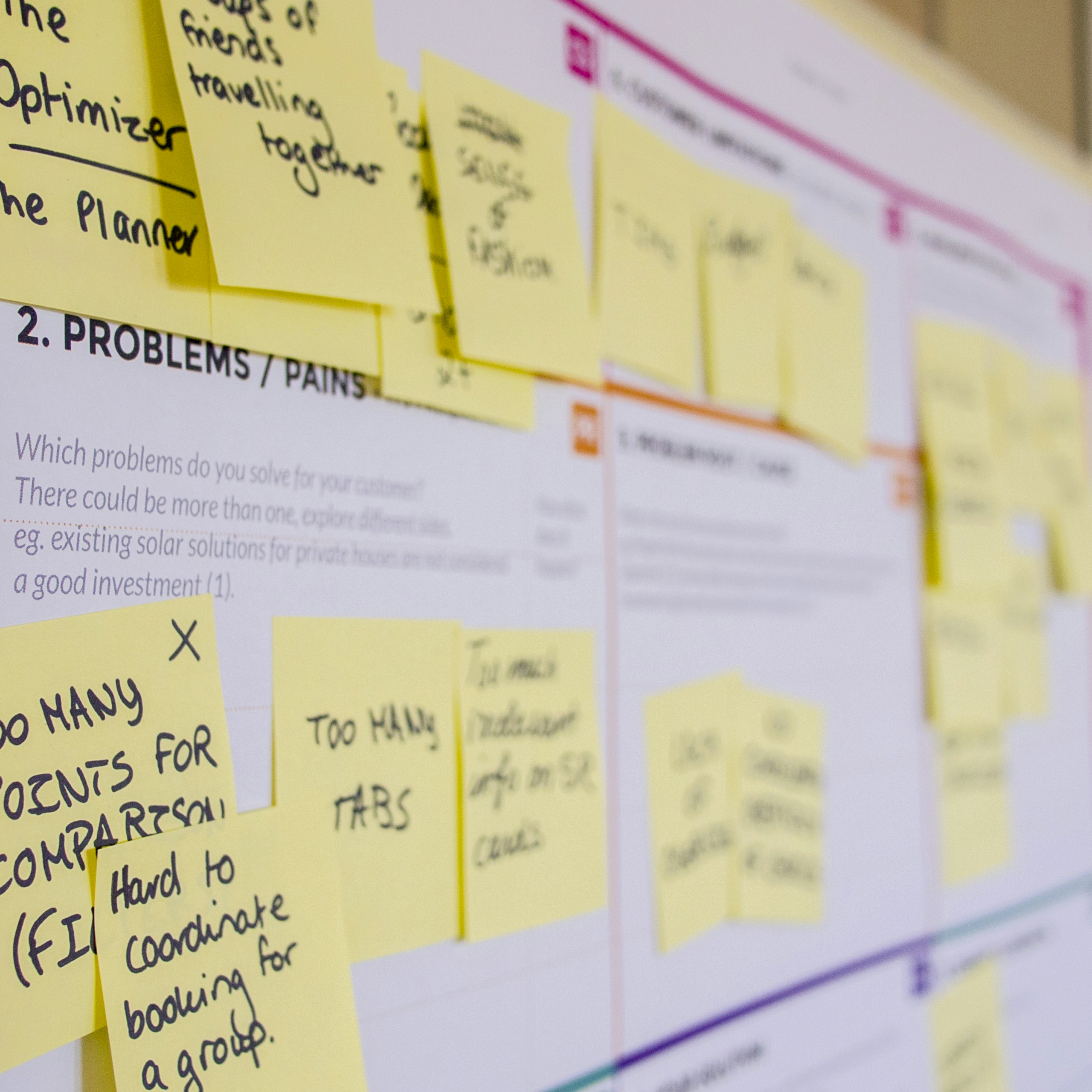
Most organisations believe they know their customers, yet their understanding is often built on assumptions, anecdotal evidence and outdated profiles.
Customer research uncovers what people are genuinely trying to achieve, how they behave and where their needs and frustrations lie.
By replacing guesswork with evidence, organisations create a shared understanding of their customers that reduces bias, speeds up decision-making and helps teams design better products, services and experiences.


Proposition Design
Innovation rarely starts with a blank sheet of paper. Strong propositions are built by understanding what customers genuinely need, how your products and services create value and what makes you different from the competition.
These insights are distilled into a clear organising idea and strategy that everyone can understand, connecting purpose, vision, values and customer benefits into a single direction that guides decision-making and drives meaningful change.
Prioritisation & Roadmapping
Prioritisation, differentiation and roadmap planning work best when they move beyond siloed decision-making and opinion. By scoring requirements across value and feasibility, organisations can identify what should be delivered, what needs further discussion, and what should be deprioritised, reducing politics and improving transparency.
Brand values are then translated into tangible experience principles, helping teams focus on where to differentiate in the customer journey. These inputs feed a shared roadmap that aligns the organisation around a single, visible plan balancing quick wins, strategic initiatives and long-term value.

Transformation Advisory
Many organisations struggle with fragmented decision-making, unclear ownership and competing priorities, often defaulting to IT-led planning that reinforces silos and slows progress. Transformation advisory introduces a structured, cross-functional approach that brings Operations, Technology, Customer Experience and Commercial teams into a shared method for evaluating demand and making decisions visible and consistent.
It connects brand strategy, customer insight and delivery feasibility into a single system for shaping change, ensuring organisations move beyond opinion-led prioritisation. The outcome is a more transparent and aligned way of working, where teams can understand not just what is being delivered, but why it matters and how it supports the wider transformation agenda.